Elitech Ld-100+ Explained: A UK Buyer's Guide
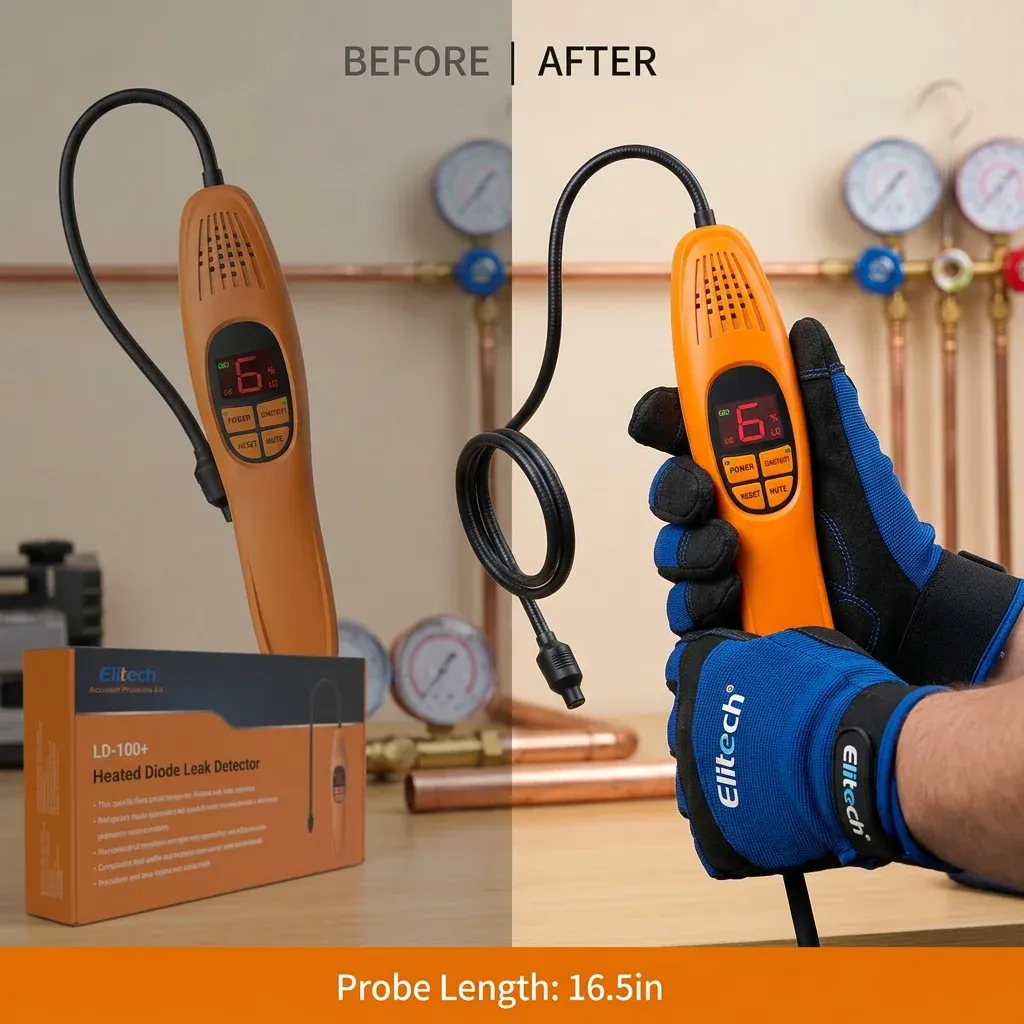
TL;DR: The elitech ld-100+ is a handheld heated diode refrigerant leak detector used to find halogen refrigerant leaks on air conditioning and refrigeration systems. For UK engineers, it can be a practical option for routine leak tracing, but the right choice depends on sensitivity, stability, false alarm resistance, battery life and support. Based on our experience of how detectors are used on UK service visits, the best results come from slow, methodical testing and a detector that remains reliable in real site conditions.
The elitech ld-100+ is a heated diode refrigerant leak detector designed to help engineers locate leaks in common HVAC and refrigeration systems. In short, if you are searching for the Elitech LD-100+ to understand what it does, who it suits and whether it is suitable for UK field work, it is generally considered a portable option for detecting halogen refrigerants such as R134a, R410A, R32 and R407C during servicing, fault-finding and commissioning checks.
Finding a refrigerant leak quickly is the difference between a straightforward service visit and hours lost chasing an intermittent fault. Therefore, for UK engineers working on split systems, VRF installations, cold rooms and vehicle air conditioning, a detector that is both sensitive and dependable matters. The elitech ld-100+ is often considered by buyers who want a practical heated diode leak detector without stepping into overly complex or overly expensive equipment.
At RefriLeak, the focus is clear: professional air conditioning leak detection for UK engineers. That means looking beyond marketing claims and assessing whether a tool can genuinely help pinpoint elusive faults in day-to-day field conditions. This guide explains what the Elitech LD-100+ is, where it fits, what to check before buying, and how it compares with the needs of engineers working under UK regulations and customer expectations.
Key Takeaways
- The elitech ld-100+ is a heated diode refrigerant leak detector designed to identify common halogen refrigerant leaks in HVAC and refrigeration work.
- It suits engineers who need portable leak detection for routine fault-finding, commissioning checks and service visits.
- For UK buyers, the real decision is not just price, but sensitivity, sensor stability, false alarm resistance, battery life and after-sales support.
- Leak detection accuracy matters commercially and environmentally because fluorinated greenhouse gases are tightly regulated in the UK.
- If you want a broader understanding of detector types and buying criteria, see The Ultimate Guide to Freon Leak Detector in the UK.
What Is the Elitech LD-100+?
The Elitech LD-100+ is a handheld heated diode refrigerant leak detector built to detect leaks from halogen-based refrigerants commonly found in air conditioning and refrigeration systems. In practical terms, it is intended for engineers tracing leaks in pipework joints, flare connections, evaporators, condensers, valves and service ports.
Heated diode technology is popular because it offers a strong balance between sensitivity and usability. As a result, a good unit can pick up small leaks while remaining fast enough for routine engineering work. That balance is important on busy callouts where time on site affects profitability.
For many UK buyers, the appeal of the LD-100+ is straightforward: it aims to provide professional-grade leak detection in a compact format. If your work involves R134a, R410A, R32, R407C and similar refrigerants, a detector in this class is usually considered a core diagnostic tool rather than an optional extra.
What does the Elitech LD-100+ do?
The main job of the Elitech LD-100+ is to help you locate refrigerant leaks by sampling air around likely failure points and alerting you when halogen refrigerant is present. In other words, it acts as an electronic sniffer for areas such as braze joints, Schrader cores, coils, flare nuts and valves.
Based on how detectors are typically used during UK maintenance visits, this type of instrument is most valuable at the initial fault-location stage. It helps narrow down where the problem lies before you move on to confirmation methods such as pressure testing or bubble solution where appropriate.
Why do UK engineers need reliable refrigerant leak detection?
Leak detection is not only about finding the fault. It is also about compliance, environmental responsibility and protecting expensive plant. Under the UK’s F gas framework, refrigerant handling and leak management remain a serious operational issue for contractors and site operators.
According to UK Government fluorinated greenhouse gases guidance, businesses operating equipment containing F gases must meet obligations around leak prevention, repair and record keeping where relevant. Therefore, accurate detection sits at the centre of responsible maintenance practice rather than being merely good workmanship.
There is also a cost implication. A system losing charge will often run inefficiently, struggle to meet setpoint and place added stress on compressors. Moreover, in settings such as surgeries, pharmacies, food retail and hospital estates linked to NHS supply chains, delayed leak diagnosis can quickly become a service continuity problem.
That is why many engineers look for detectors with proven low-level sensitivity. RefriLeak’s own product positioning reflects this need: a premium 3g/y heated diode refrigerant leak detector is valuable because elusive faults are rarely obvious. Small leaks hidden in awkward locations are exactly what cost time and repeat visits.
How does the Elitech LD-100+ work?
How does heated diode sensing work in practice?
A heated diode leak detector draws in air through the probe tip. When refrigerant containing halogen compounds is present, the sensor reacts and the instrument alerts the user through visual and audible signals. The better the detector performs in field conditions, the more confidently it can distinguish a genuine leak from background contamination.
In service work this matters because plant rooms are rarely clean test environments. For example, there may be oil residue, cleaning chemicals, solvent vapours or residual refrigerant from previous repairs. Consequently, a stable detector helps reduce wasted time caused by false positives.
What should you listen and look for when using it?
Most users rely on a combination of rising tone alerts, flashing indicators and sensitivity settings. However، you do not simply wave the probe around and expect instant certainty. Effective leak tracing means moving slowly، checking likely failure points methodically and confirming results from more than one angle.
If you are new to this category، our related guide on HVAC refrigerant sniffer explained: a UK buyer's guide gives useful context on how sniffers are used in real maintenance workflows.
Who should buy the Elitech LD-100+?
The elitech ld-100+ is best suited to buyers who need a dependable general-purpose refrigerant leak detector for regular field use. That includes:
- Air conditioning engineers carrying out maintenance and fault-finding
- Refrigeration contractors servicing commercial systems
- Facilities maintenance teams responsible for cooling plant
- Automotive air conditioning technicians working with common refrigerants <
- Apticeshey qualified heers building prgnostic kit
The answer depends on your workload expectations budget Based our testing priorities at RefriLeak most engineers want three things first reliable low level detection second stable operation around contaminated equipment rooms third enough responsiveness make site work efficient The Elitech LD 100 plus sits in buying conversation because it aims cover those everyday needs without becoming overly specialised
If you mainly handle routine maintenance callouts light commercial refrigeration split systems or standard AC fault finding this sort of detector may be entirely suitable On the other hand if your work regularly involves very small hard to confirm leaks across critical plant buyers often compare entry mid range units against higher sensitivity professional tools before deciding < section > < h2 >What features should you check before buying an Elitech LD-100+? < h3 >How sensitive does it need to be? < p>The first question is simple: how small a leak can it find consistently? Marketing sensitivity figures are useful but field performance matters more. A detector that responds well in still air yet struggles outdoors or near condenser airflow can slow the job down substantially.
< p >RefriLeak’s main site message highlights a premium < strong >3g/y heated diode refrigerant leak detector< /strong > because low leak-rate detection remains one of the clearest indicators of serious professional capability. < h3 >How important are warm-up time and response speed? < p >Warm-up time affects how quickly you can start testing at site arrival while response speed affects how confidently you can sweep joints coils valves and pipe runs Efficient workflow matters especially when moving between occupied properties retail units or planned maintenance calls across multiple locations. < h3 >Does sensor stability matter in real-world conditions? < p >Yes sensor stability matters greatly because service environments are rarely perfect Based on our experience reviewing how engineers use detectors day to day false alarms often cause more frustration than headline specification limits Therefore look closely at how well any unit recovers after exposure to concentrated refrigerant or airborne contaminants. < h3 >What about battery life build quality and support? < p >Battery life portability probe flexibility case quality spare sensor availability warranty terms and supplier support all affect long term value Additionally UK buyers often prefer tools backed by clear after sales help rather than simply chasing headline price alone. < section > < h2 >Can the Elitech LD-100+ detect common refrigerants used in the UK? < p >For most buyers this is one of the main questions The Elitech LD-100 plus belongs to the heated diode category generally chosen for detecting halogen based refrigerants commonly encountered across UK air conditioning refrigeration and vehicle AC applications That usually includes widely used refrigerants such as R134a R410A R32 R407C and similar blends depending on manufacturer specification. < p >Even so always check current product documentation before purchase because supported gases stated by manufacturers should guide final buying decisions Furthermore correct technique still matters because even compatible detectors can miss leaks if airflow contamination probe speed or access issues interfere with testing. < section > < h2 >How should you use the Elitech LD-100+ accurately? < h3 >Move slowly around likely leak points < p >Firstly allow any required warm up period Then move slowly around joints brazed areas flare connections access valves filter driers coils headers distributors Schrader cores sight glasses where fitted oil stains or corrosion points This improves your chances of identifying subtle changes rather than overshooting them. < h3 >Avoid obvious sources of false readings < p >Secondly be aware of wind strong fan discharge solvents cleaning agents residual charge from recent recovery work or pooled refrigerant in confined areas These factors can affect how any sniffer behaves especially near rooftop condensers or busy plant rooms. < h3 >Confirm suspicious areas carefully < p >Finally once an area triggers repeat passes from different directions reduce sensitivity only if needed isolate airflow where possible then confirm with another suitable method if required Based on our field-first approach no single tool should be treated as magic but good process makes good detectors far more effective. < section > < h2 >Is an electronic leak detector better than soap solution or UV dye? < p >Generally an electronic detector such as the Elitech LD-100 plus is faster for initial fault location especially on routine callouts Soap solution remains useful for confirming accessible leaks once narrowed down while UV dye may suit certain longer term tracing scenarios However none of these methods fully replaces another because each has strengths limitations cost implications and suitability differences. < p >Therefore many UK engineers treat an electronic sniffer as their first-line diagnostic tool then use other methods selectively depending on access system condition customer constraints safety considerations and evidential confidence. < section > < h2 >Should you buy the Elitech LD-100+ or compare alternatives? <> <> <>You should compare alternatives if ultra-low-leak sensitivity premium build quality advanced filtering stronger after-sales support or brand familiarity matter more than initial purchase price While some buyers simply want an affordable heated diode unit others need higher confidence tools for repeated commercial diagnostics across demanding sites. >Yes potentially especially for apprentices newly qualified engineers or technicians who want dedicated electronic leakage detection rather than relying only on manual methods Even so beginners still need correct technique patience awareness airflow effects avoid poor results.< /p>>
< >It may suit automotive air conditioning work where compatible halogen refrigerants involved but always check manufacturer specifications before purchase If mixed vehicle workshop use matters our dedicated guide at <Automotive AC leak detector explained: buyer's guide< /a>> offers more context.< /p>>
<>Frequently asked questions about the Elitech LD-100+>
<
>Is the Elitech LD-100+ suitable for beginners?< /h3>>
<
>Can it be used on automotive air conditioning?< /h3>>
<
>Why do some detectors give false alarms?< /h3>>
<
The bottom line on choosing an Elitech LD-100+ in the UK<प>If you searched for "
Ready to upgrade your diagnostics with {brand_name}?
Equip Your Workshop — £155.67